
The $$ Attached To The 5 Friction Buckets

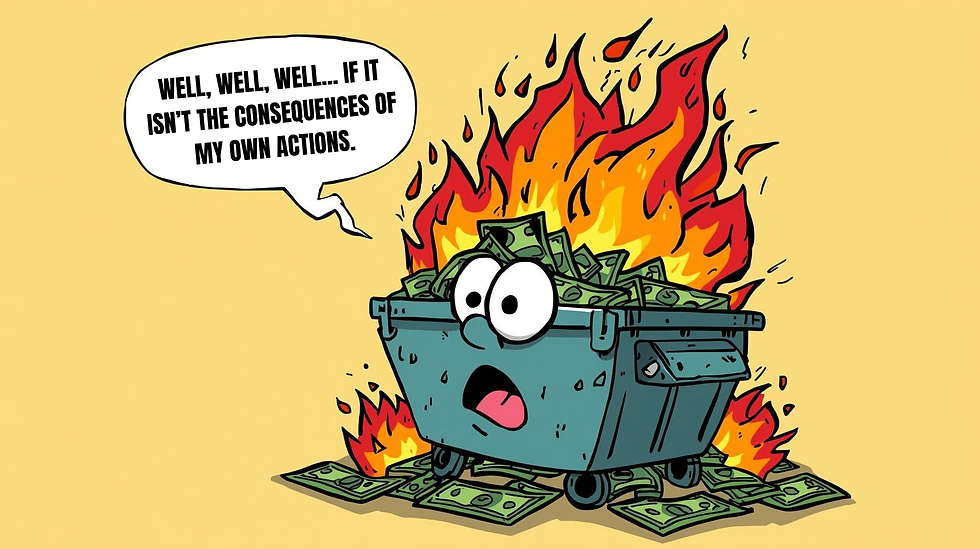
You know the friction exists. You feel it every week—meetings that go nowhere, conflicts that escalate to you, decisions that stall.
But when it comes time to justify an investment in fixing it? The conversation usually dies at "How much is this actually costing us?"
You don't need a forensic audit. You need conservative math you can defend to your CFO.
These five friction points exist in your organization right now. Each one is bleeding money quietly, consistently, and measurably. Let's put numbers to what you're already experiencing.
1. Productivity Drag from Misalignment
You see this as:
Meetings where your team talks in circles
Work getting redone because priorities weren't clear
People waiting on decisions that should have already been made
"I thought you were handling that" showing up too often
Here's the conservative math:
Take just 10 of your leaders or managers
Assume just 1 hour per week per person lost to friction (it's probably more)
Use an average fully loaded cost of $75–$150/hour
10 × 1 × 52 × $100 = $52,000 per year
That's one hour per person per week. If your team is losing more than that—and most are—the number climbs fast.
2. Manager Time Spent on Avoidable Conflict
You see this as:
Your managers mediating personality issues instead of managing work
Cleaning up communication breakdowns between team members
Handling escalations that shouldn't need to reach them
Here's the conservative math:
3 of your managers
2 hours per week each spent on this (probably conservative)
$120/hour fully loaded
3 × 2 × 52 × $120 = $37,440 per year
This doesn't include the emotional tax—the exhaustion your managers feel from constantly being in the middle. You feel that cost even if you can't measure it.
3. Turnover and Quiet Quitting
You see this as:
High performers leaving and citing "culture fit" or "new opportunities" when you know it's really the friction
People staying but clearly disengaged, doing the minimum
Institutional knowledge walking out the door with every exit
Here's the conservative math:
Replacing one salaried employee costs 50–150% of their salary
Let's use the low end to be credible
One $80K employee leaving = $40K–$60K in replacement costs (recruiting, onboarding, lost productivity, training)
One prevented exit = $40,000–$60,000 saved
If addressing friction prevents even one regrettable departure this year, you've covered a significant portion of any intervention cost.
4. Client or Internal Escalation Costs
You see this as:
Getting pulled into fires that shouldn't require your attention
Clients losing confidence because internal friction is visible to them
Relationships that now need your personal attention to maintain
Here's the conservative math:
One lost or strained client relationship
One delayed project that damages reputation
One partnership that now requires executive-level intervention to keep alive
Variable, but often $50,000–$250,000+ in lost opportunity or damage control
You already know this cost. You're living in it right now. The question is whether you're ready to address what's creating it.
5. Decision Latency
You see this as:
No one wanting to own the call, so it comes back to you
Decisions circling your leadership team endlessly
Risk aversion disguised as "making sure we're all aligned"
Here's the conservative math:
Delayed decisions slow revenue, delivery, and morale
Even a 1–2% drag on a $5M operation = $100K annually
Even a 1–2% drag on a $20M operation = $400K annually
Six-figure impact if your operation is over $5M
This is often the number that makes COOs sit forward. Because you feel it—the cost of moving slower than you should.
The Total Picture in Your Organization
Let's use the most conservative numbers from above:
Productivity drag from misalignment → $52,000
Manager time on avoidable conflict → $37,440
One prevented turnover → $40,000
One escalation/client issue → $50,000+
Decision latency (1% drag on $10M) → $100,000
Conservative Total → $279,440+
And remember, this assumes:
Only 10 of your people are affected by misalignment
Only 3 of your managers are dealing with conflict
Only 1 turnover prevented
Only 1 client/escalation issue this year
Only a 1% operational drag
Look at your organization. Are these numbers actually conservative for you, or are you dealing with multiples of these scenarios?
What This Math Actually Tells You
This isn't theoretical. This is baseline organizational friction that you're quietly absorbing as "just how it is."
The real question isn't whether friction exists in your organization—you already know it does. The question is whether you're ready to treat it as the operational issue it is, with real dollar impact that deserves a real solution.
Here's why this math will land with your CFO:
It's conservative - These are low estimates, not best-case scenarios
It's recognizable - You've lived every one of these scenarios
It's recurring - This isn't a one-time cost, it's annual bleed
It's addressable - Unlike market conditions or external factors, this is within your control
The Intervention Math That Makes Sense
When you can document $200K–$500K in annual friction costs, investing $35K–$75K to address it isn't a leap of faith—it's a rational operational decision.
You're not comparing this investment to leadership coaching or culture consultants. You're comparing it to:
The continued cost of turnover
Ongoing burnout in your management layer
Expensive reorgs that don't address the root causes
Consultants who take 6 months to tell you what you already know
The reframe that changes the budget conversation:
"This isn't a culture program. It's a short-term operational intervention designed to reduce friction costs we're currently absorbing every year."
That one sentence shifts the entire conversation from "nice to have" to "fiscally responsible."
What You're Actually Investing In
You're not being asked to believe in transformation. You're being offered measurable stabilization:
Reduction in escalation frequency - Measurable in manager hours freed up
Fewer hours spent on conflict management - Trackable week over week
Faster decision turnaround - Visible in project velocity
Leadership confidence pulse before and after - Quantifiable through direct measurement
The ROI will land for you emotionally first—when someone accurately names the pain you're feeling—and intellectually second—when you see reasonable dollars attached to problems you know are real.
That's how you'll know whether to move forward.
One More Thing
You don't need to over-engineer this math for your CFO. You need to show them conservative numbers that reflect your reality.
When you do that, the conversation usually doesn't stall on "prove the ROI." It shifts to: "How do we fix this?"
And that's the conversation worth having.
Calculate Your Friction Cost
The five buckets are universal. The dollar amounts are specific to your organization.
Take 10 minutes. Pull your actual numbers:
How many of your leaders are losing time to misalignment?
How many of your managers are spending hours on avoidable conflict?
How many regrettable departures have you had this year?
How many client or internal escalations required executive intervention?
What's your actual operational scale, and what does a 1-2% drag cost you?
The number will probably be higher than $279K. And it's recurring annually.
Want to understand how to address both the system friction AND the human capacity gaps that create these costs?
Because documenting the cost is step one. Knowing how to address it—without spending six months in analysis paralysis—is where real change begins.
Human Intelligence Industry Where performance meets presence and people get their shit together.


Comments