
Human Intelligence in Practice


What Elevated Workplaces Actually Look Like
The False Promise of “Just Add AI”
Every organization right now is being sold the same story: implement AI, increase efficiency, watch profits soar.
Adoption numbers look impressive. Roughly three quarters of global knowledge workers now use generative AI. And yet, nearly the same percentage of organizations report struggling to achieve or scale meaningful value from those investments.
The disconnect is telling.
While most CHROs say they have begun using AI, only a third of employees are aware of it, and even fewer understand how it fits into a broader plan. Tools are moving faster than clarity.
The gap is not technological. It is human.
Most workplace breakdowns do not start with bad intent or poor systems. They start when people operate under sustained pressure without the internal capacity to navigate it.
Leaders default to urgency. Teams become reactive. Conversations are delayed or escalate unnecessarily. Values exist, but stop guiding real decisions. More energy goes into managing the environment than moving the work forward.
No system fixes that.
This is where human intelligence becomes operational. Not as an abstract idea, but as a deliberate way of building workplaces where people and systems work together instead of against each other.
What Elevated Workplaces Look Like in Practice
In organizations that function well under pressure, the difference is visible.
Leaders remain steady as complexity increases. Decisions are made with context rather than panic. Teams can disagree without derailing the work. Accountability exists without fear.
Values function as filters, not slogans. When something does not align, it is addressed early rather than justified later. That alone removes a significant amount of friction.
Work feels calmer, not because expectations are lower, but because unnecessary drag is reduced. Focus improves. Energy stops leaking into avoidable conflict. Productivity increases without pushing people past their limits.
HR is no longer a pressure valve for unresolved leadership issues. Leaders handle the human side of leadership closer to the source. Patterns are corrected before they turn into exits, escalations, or burnout.
This is not culture by accident. It is capacity by design.
The Human Capacities Behind It
Across industries, the same five human capacities consistently show up in organizations that scale without fragmenting.
Sustainable Performance The ability to perform under pressure without relying on depletion. Leaders recognize when clarity is fading and teams protect focus instead of glorifying constant availability.
Vitality & Motivation An understanding of how presence, regulation, and communication shape outcomes. Stress does not leak into every interaction. Messages land with precision.
Strategic Mindset The discipline to separate what is loud from what matters. Decisions are driven by alignment and context rather than urgency or optics.
Discernment in Action Momentum rooted in aligned choices. Courage paired with judgment. Accountability that builds trust instead of fear.
Purpose & Vision A clear sense of meaning that sustains engagement when conditions are uncertain and work is demanding.
When these capacities are weak, friction multiplies. When they are strong, everything moves with less force.
What This Requires From Leadership
An Elevated Workplace is not something you implement. It is something you commit to.
It requires leaders willing to build their own capacity before asking more of their teams.
Leadership capability quietly sets the ceiling for organizational performance.
It requires tolerance for discomfort. Growth demands honest conversations and the release of familiar but ineffective patterns.
And it requires treating human capacity as infrastructure, not a side initiative or a nice-to-have.
The Container for This Work
This is the work behind what we call The Elevated Workplace. A structured recalibration that builds human capacity in parallel with operational demands.
The first six weeks focus on restoring clarity, energy, and alignment through group work across the five core capacities.
The following six weeks integrate that awareness into real decisions, current pressures, and live leadership challenges through individual application.
This second phase is what makes the difference between insight that fades and behavior that holds under pressure. The goal is changed behavior that lasts.
The ROI of Human Intelligence
Organizations consistently report:
Clearer and faster decision making
Reduced communication friction
Improved retention without chasing compensation upward
Renewed innovation as survival mode lifts
HR shifting from firefighting to strategy
These are not abstract benefits. They are compounding advantages.
The Choice Defining the Next Decade
Every organization is standing at a fork.
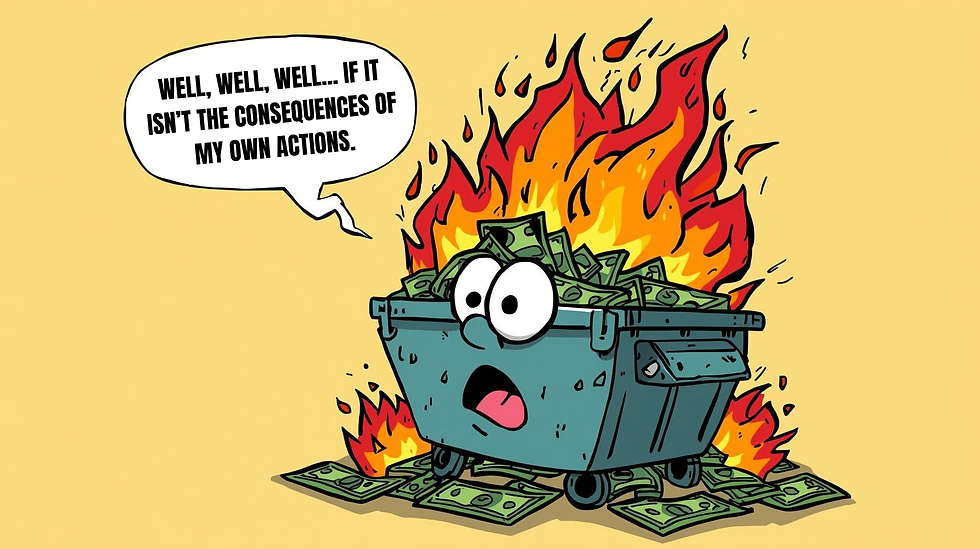
One path continues layering new tools onto strained systems, pushing for productivity gains while hoping the human side catches up.
The other recognizes that the current moment demands more than technology. It builds the human capacity required to lead through complexity without fragmenting.
Organizations that choose the second path will not just adapt to the AI era. They will shape it.
Because the real advantage is not artificial intelligence --> It is humans who can think clearly, stay grounded, and work well together inside the complexity those tools create.
That is what elevated work looks like in practice. And that is the work we do.
Ready to Elevate?
This work resonates most with leaders carrying real scale and real consequence.
Those responsible not just for performance, but for coherence. For decisions that ripple through people, systems, and long-term viability. For organizations where complexity is no longer occasional, but constant.
Leaders of the next decade will be distinguished by their capacity to integrate technology with human judgment. To lead through ambiguity without destabilizing the system and build alignment that holds under pressure.
In an AI-enabled workplace, the differentiator is the ability to apply it with clarity, discipline, and discernment.
That is the work behind Elevated Workplaces. And it begins with leaders who understand that sustainable advantage is built from the inside out.
While others chase tools, we build people. Hii Website


Comments